

The Knostic platform would have prevented the GitHub breach from affecting your enterprise. Request a demo here — our product is free up to five licenses.
The GitHub Breach Is a Developer Problem
On May 20, 2026, GitHub confirmed it was investigating unauthorized access to internal repositories after the threat actor known as TeamPCP listed roughly 4,000 internal repositories — including source code and internal organization data — for sale on a cybercrime forum at an asking price of $50,000. A developer had installed a malicious VS Code extension.
The headline is dramatic. The underlying mechanics are familiar, and they should worry every CISO whose engineering organization has quietly adopted AI coding assistants, MCP servers, and a long tail of VS Code extensions over the last eighteen months.
What Actually Happened
The GitHub listing is not an isolated event. It sits inside a broader campaign attributed to TeamPCP and known as Mini Shai-Hulud — a self-replicating worm that has compromised the developer surface from multiple angles. The GitHub breach itself originated in a malicious VS Code extension installed on a developer's machine. In parallel, the same campaign has compromised packages across PyPI and npm — including durabletask, Microsoft's official Python client for the Durable Task framework, downloaded roughly 417,000 times per month. Same actor, same playbook, different artifact.
The pattern across each compromise is consistent:
- A developer account or environment is compromised through an earlier supply-chain incident — a trojanized extension, a malicious package, a stolen token.
- The attacker dumps secrets from repositories the developer can reach — including PyPI and npm publishing tokens, marketplace credentials, and cloud keys.
- Those credentials are then used to push trojanized updates of legitimate VS Code extensions, or to publish malicious versions of legitimate packages.
- The malicious artifact — extension or package — runs the moment it loads. It harvests cloud credentials, reads HashiCorp Vault secrets, dumps 1Password and Bitwarden vaults, and exfiltrates SSH keys, Docker credentials, VPN configurations, and shell history.
- From there it propagates — through AWS SSM SendCommand to other EC2 instances, through kubectl exec inside Kubernetes, and through any developer machine where the artifact gets installed next.
In other words: a single trusted artifact in a developer's environment became the entry point for an enterprise compromise. The attacker doesn't need to breach your perimeter. They just need to be inside one extension, one package, one MCP server that your developers already trust.
Why Traditional Supply Chain Controls Missed It
Most enterprises have invested heavily in software composition analysis, SBOMs, and registry scanning for production dependencies. Those controls remain important, but they were designed for a world where the developer's local environment was a relatively static collection of IDEs, language runtimes, and a handful of plugins.
With the rise of agentic AI, that paradigm is gone.
A modern engineer's workstation now routinely includes a primary AI coding assistant with its own extension ecosystem, one or more MCP servers connecting that assistant to internal systems, a long tail of VS Code extensions, many auto-updating and many published by individuals, and an emerging layer of agent skills, plugins, and marketplaces that did not exist even twelve months ago.
Each of these coding assistants has credentials, can read files, execute code, and reach into cloud and SaaS environments. None of them appear in your SBOM. Few of them are inventoried anywhere at all.
This is the surface TeamPCP and other attackers are exploiting.
How Knostic Addresses the Underlying Problem
Knostic builds products specifically for this surface.
Kirin runs in the developer's IDE — Cursor, Claude Code, GitHub Copilot — and inspects dependencies, extensions, and MCP connections in real time. In an incident like the GitHub VS Code extension compromise, Kirin's role is the inline brake: the malicious extension is identified and execution is blocked before its payload can reach cloud credentials, password vaults, or SSH keys. It also redacts and guards sensitive data flowing through the assistant, so the secrets the worm tries to harvest never leave the IDE in usable form.
AgentMesh sits one level out. It continuously discovers, tracks, and scans the AI agent skills, MCP servers, and VS Code extensions running across the organization — the exact components Mini Shai-Hulud is using as its propagation path. It surfaces newly compromised versions, behavior consistent with credential harvesting, and drift in the developer agent inventory itself.
For teams that want to put AgentMesh threat intelligence in front of their developers today, Knostic also publishes an open-source agent skill: extension-check. Drop it into Claude Code as a plugin or into Cursor's native Agent Skills directory in under a minute, then ask in plain language (e.g., "audit my VS Code extensions against AgentMesh") and the skill enumerates every installed Cursor, VS Code, and Copilot extension, queries AgentMesh, and returns a tabular report (MATCH, VERSION_MISMATCH, NOT_FOUND, PARTIAL) with risk labels. No signup required. It is the fastest way to know whether anything currently installed on an engineering laptop matches the artifacts behind this campaign.
Together, the platform covers both halves of the problem this breach exposes. Kirin stops the malicious artifact at the moment of execution. AgentMesh ensures the security team can see, inventory, and continuously assess the broader agent surface that the next worm will target. The extension-check skill puts that intelligence inside developer workflows immediately.
It's Always About the Basics
Even with the right tooling in place, this class of incident keeps coming back to the same fundamentals. A few things worth checking this week:
- Inventory the developer agent surface. You cannot defend what you cannot see. Which MCP servers are installed across engineering laptops? Which VS Code extensions? Which agent skills? In most organizations, this list does not exist.
- Treat any host that installed an affected extension or package version as fully compromised. Mini Shai-Hulud propagates using stolen tokens, so credential rotation alone is insufficient if the host that held those tokens is still trusted.
- Constrain what AI coding assistants and developer agents can do at execution time. The blast radius in this campaign comes from over-permissioned local environments where a freshly loaded extension or imported package can read everything on the machine. Inline policy enforcement, not after-the-fact scanning, is what would have stopped this.
- Rotate extension and marketplace publishing tokens, not just cloud keys. This is the credential class attackers are reusing to push the next trojanized update. Most organizations don't track them.
The GitHub breach will not be the last incident of its kind. The combination of trusted developer tooling, broad local credentials, and a self-replicating worm is a structural problem, not a one-time event. Organizations that wait for it to reach their own developers will be reading about themselves on Hacker News next.
If you would like a walkthrough of how Kirin and AgentMesh would map to your environment, you can request a demo here.
Subscribe to our blog!
Data Leakage Detection and Response for Enterprise AI Search
Learn how to assess and remediate LLM data exposure via Copilot, Glean and other AI Chatbots with Knostic.


The Data Governance Gap in Enterprise AI
See why traditional controls fall short for LLMs, and learn how to build policies that keep AI compliant and secure.

Rethinking Cyber Defense for the Age of AI
Learn how Sounil Yu’s Cyber Defense Matrix helps teams map new AI risks, controls, and readiness strategies for modern enterprises.

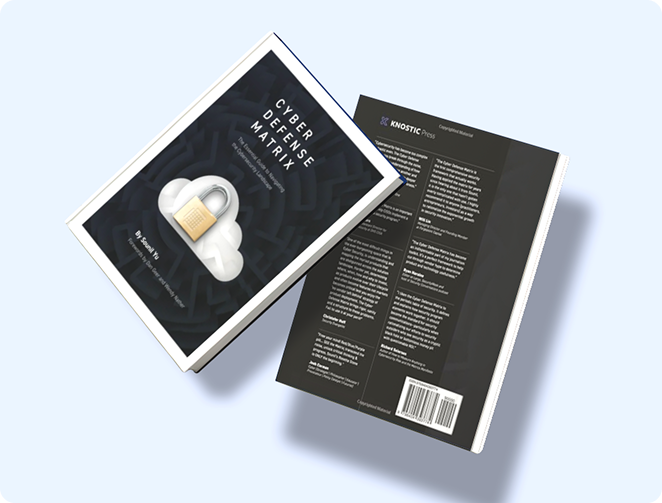
Extend Microsoft Purview for AI Readiness
See how Knostic strengthens Purview by detecting overshared data, enforcing need-to-know access, and locking down AI-driven exposure.

Build Trust and Security into Enterprise AI
Explore how Knostic aligns with Gartner’s AI TRiSM framework to manage trust, risk, and security across AI deployments.

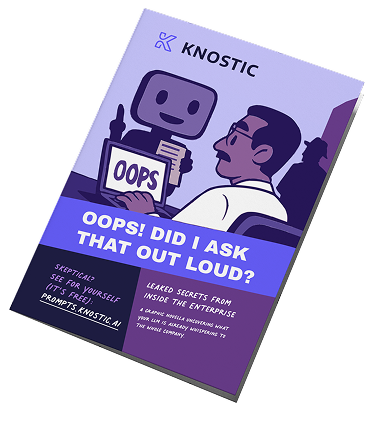
Real Prompts. Real Risks. Real Lessons.
A creative look at real-world prompt interactions that reveal how sensitive data can slip through AI conversations.

Stop AI Data Leaks Before They Spread
Learn how Knostic detects and remediates oversharing across copilots and search tools, protecting sensitive data in real time.
Accelerate Copilot Rollouts with Confidence
Equip your clients to adopt Copilot faster with Knostic's AI security layer, boosting trust, compliance, and ROI.

Reveal Oversharing Before It Becomes a Breach
See how Knostic detects sensitive data exposure across copilots and search, before compliance and privacy risks emerge.

Unlock AI Productivity Without Losing Control
Learn how Knostic helps teams harness AI assistants while keeping sensitive and regulated data protected.
Balancing Innovation and Risk in AI Adoption
A research-driven overview of LLM use cases and the security, privacy, and governance gaps enterprises must address.

Secure Your AI Coding Environment
Discover how Kirin prevents unsafe extensions, misconfigured IDE servers, and risky agent behavior from disrupting your business.
Tags: